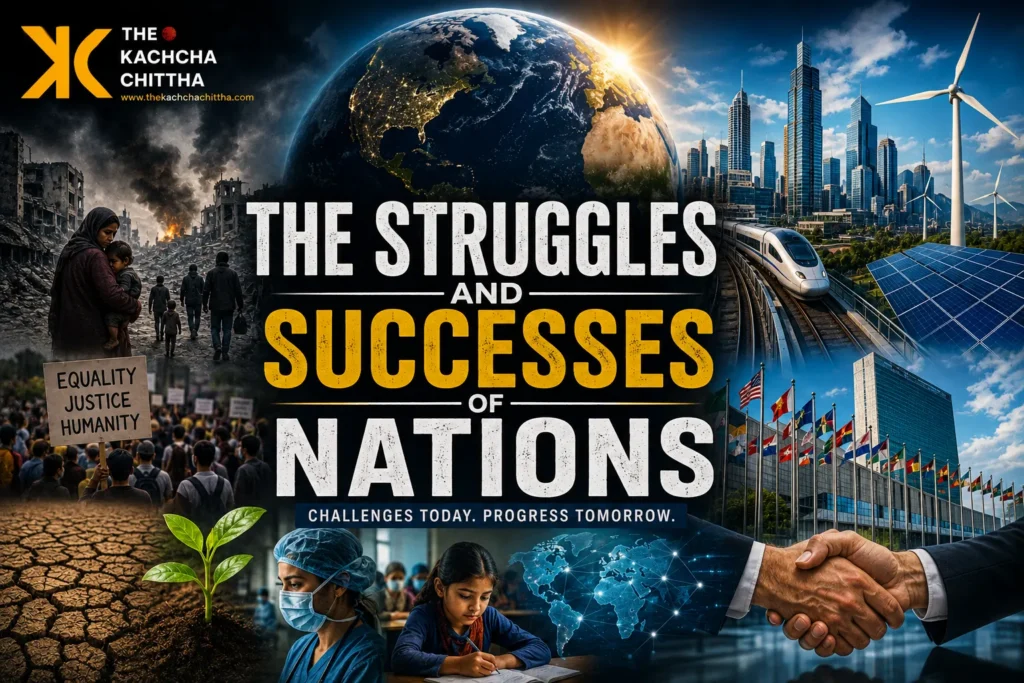

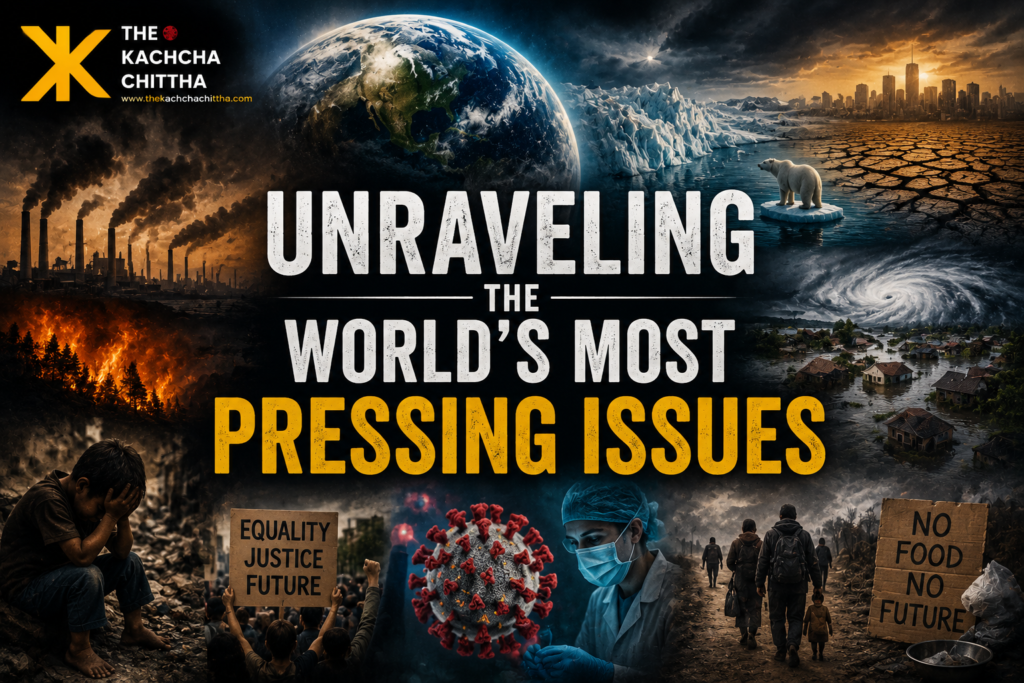
In an increasingly interconnected world, global challenges are becoming more complex and impactful than ever before. From climate change and economic instability to conflicts, technological disruption, and public health concerns, nations across the globe are facing issues that affect millions of lives every day.
Understanding these pressing problems is essential for creating awareness, encouraging dialogue, and finding long-term solutions.
1. Climate Change and Environmental Crisis


7
Climate Change remains one of the biggest threats facing humanity. Rising global temperatures are leading to extreme weather events, melting glaciers, rising sea levels, and biodiversity loss.
Countries worldwide are experiencing:
- Severe heatwaves
- Floods and hurricanes
- Water shortages
- Wildfires
Governments and environmental organizations continue to push for renewable energy adoption and stricter carbon emission policies.
2. Global Economic Uncertainty
The global economy has been under pressure due to inflation, geopolitical tensions, supply chain disruptions, and rising unemployment in several regions.
Inflation has significantly increased the cost of living, affecting food prices, fuel costs, and housing affordability for millions of people.
Experts believe that economic recovery will depend on stable policies, innovation, and international cooperation.
3. Conflicts and Humanitarian Crises


7
Armed conflicts in different parts of the world continue to create humanitarian emergencies. Millions of people have been displaced from their homes due to violence, political instability, and war.
International organizations are working to provide:
- Food and medical assistance
- Refugee support
- Emergency shelter
- Peace-building initiatives
These crises highlight the urgent need for diplomacy and global unity.
4. Public Health Challenges


6
Healthcare systems around the world continue to face pressure from emerging diseases, mental health concerns, and unequal access to medical services.
COVID-19 exposed vulnerabilities in global healthcare infrastructure and emphasized the importance of preparedness and medical research.
Mental health awareness is also gaining attention as stress, anxiety, and burnout continue to rise globally.
5. Artificial Intelligence and Technological Disruption


6
Artificial Intelligence is transforming industries rapidly. While AI offers innovation and efficiency, it also raises concerns about:
- Job displacement
- Data privacy
- Cybersecurity
- Ethical decision-making
Governments and technology companies are now discussing regulations to ensure responsible AI development.
6. Rising Food and Water Insecurity


7
Millions of people worldwide still struggle with hunger and limited access to clean drinking water. Climate conditions, economic instability, and population growth are putting pressure on food production systems.
Agricultural innovation and sustainable farming are becoming essential for ensuring future food security.
7. Cybersecurity and Digital Threats


8
As the world becomes more digitally connected, cyberattacks and online fraud are increasing. Businesses, governments, and individuals are investing heavily in cybersecurity measures to protect sensitive data and infrastructure.
Digital safety is now considered a critical part of national security.
Conclusion
The world today faces multiple interconnected challenges that require collective action, innovation, and responsible leadership. While these pressing issues may seem overwhelming, they also present opportunities for global cooperation and meaningful change.
By staying informed, supporting sustainable solutions, and encouraging dialogue, societies can work toward a safer, healthier, and more stable future for generations to come.